XPR Network (XPR)
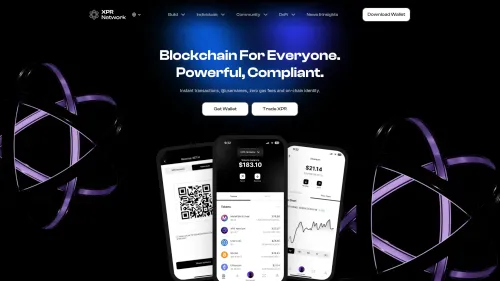
XPR Network (former Proton Network) is a public, layer-one blockchain designed for both consumer and enterprise use cases[1]. Built on the Antelope protocol and leveraging a Delegated Proof-of-Stake (DPoS) consensus model, it aims to deliver high throughput, minimal latency, and zero-cost transactions to end users. With a focus on real-world use cases and developer accessibility, the platform positions itself as a foundation for decentralized finance, digital identity, supply chain transparency, and tokenized assets.
Token
The XPR token is designed with a controlled supply and moderate annual inflation, serving as a short-term value store for decentralized applications (dApps) while enabling blockchain governance. At launch, 200 million XPR tokens will be in circulation, with an annual inflation rate of 5%. This inflation is allocated as follows: 2.5% to block producers, 1.5% to token stakers, and 1% to the Proton Steering Committee.
Block producers are responsible for validating nodes through the open-source Proton protocol. Transactions require a two-out-of-three consensus among producers and achieve finality within three minutes.
| Ticker | XPR |
| Category | Finance / Banking |
| Website | https://xprnetwork.org |
| @XPRNetwork | |
| Telegram | XPRNetwork |
| https://www.reddit.com/r/ProtonChain/ | |
| Contract Addresses | |
|---|---|
| ethereum | 0xd7...af Copied! Copied! |
| binance-smart-chain | 0x5d...abCopied! |
The Proton Steering Foundation receives 1% of the annual inflation and operates under a delegated proof-of-stake (dPos) model, with votes held every three months. Its role includes rewarding development teams from Metal and Lynx for contributions to Proton’s wallets, applications, and marketing. It also supports independent groups like CryptoLions for core blockchain work and fosters inter-blockchain communication (IBC) through Proton’s Secure Identity and multi-ecosystem standards.
Token stakers participate in governance by voting for block producers on a one-token, one-vote basis. To vote, they must bond their tokens, accepting the risk of economic penalties if their chosen producers underperform.
Core infrastructure and consensus
At its core, XPR Network utilizes the DPoS consensus mechanism, which relies on a group of elected block producers and token stakers to maintain the integrity of the chain. Unlike Proof-of-Work systems, which require significant computational resources, DPoS is comparatively more energy-efficient and scalable. This architecture allows the network to process up to 4,000 transactions per second (TPS) with near-instant finality.
The platform emphasizes decentralization, citing a high Nakamoto coefficient — a metric that reflects the number of nodes required to compromise the network — as evidence of its resilience against common blockchain threats such as double spending and 51% attacks. According to its developers, the network has experienced no downtime since the genesis block.
Zero gas fees and the resource model
A key differentiator of XPR Network is its gas-free model for end users. Unlike Ethereum and other major blockchains that require users to pay transaction fees (often fluctuating based on network congestion), XPR Network provides users with free accounts and resources for transactions. Instead, developers and applications are responsible for acquiring computational resources via a monthly subscription model.
This architecture removes cost barriers for users while offering predictability for developers, which is particularly relevant for applications in micropayments, gaming, and social media, where high-frequency interactions are common.
Applications across industries
XPR Network is marketed as a general-purpose platform capable of supporting a wide range of blockchain use cases:
Payments: With its high throughput and instant settlement, the network is positioned as an alternative to traditional systems such as ACH, SWIFT, Visa, and Mastercard for domestic and international payments.
Supply chain transparency: Blockchain-based logging of goods movement on XPR can help verify origin and authenticity of products, reducing fraud and enhancing traceability.
Tokenized assets: The network supports the tokenization of physical assets, such as real estate and art, enabling fractional ownership and improving liquidity in illiquid markets.
DeFi ecosystem: XPR Network provides infrastructure for lending, borrowing, and liquidity provisioning. The network supports smart contracts and decentralized applications, making it suitable for a variety of financial protocols.
Digital identity: It includes support for secure, verifiable identities, aiming to reduce fraud in authentication and access control systems.
Developer experience
The XPR Network ecosystem is built with accessibility in mind, particularly for web developers. The primary smart contract development language is TypeScript, used via a custom SDK[2]. The project promotes type safety and code consistency as a priority, especially when interacting with low-level blockchain functions.
The official GitHub repository provides examples and starter templates to ease the learning curve. Developers are encouraged to use the testnet environment for experimentation before deploying to the mainnet. A typical developer stack includes Node.js 20+, Git, and basic command-line proficiency[2].
Storage on XPR is intentionally constrained — developers are advised to minimize on-chain data and offload intensive computations to external servers. This design principle reflects a broader trend in blockchain design, where on-chain activity is reserved for validation and finality rather than computation-heavy operations.
Ecosystem tools and account management
On the XPR Network, each account is a blockchain-registered identity that can interact with contracts and execute transactions. Accounts can be assigned varying permissions through key-based or account-based authorities, allowing for fine-grained control of actions and delegated access.
Developers and users can switch between testnet and mainnet by changing chain IDs or nodes. SDKs such as @proton/web-sdk and @proton/react-native-sdk provide abstraction layers to simplify integration with front-end applications.